Start here. No science background required.
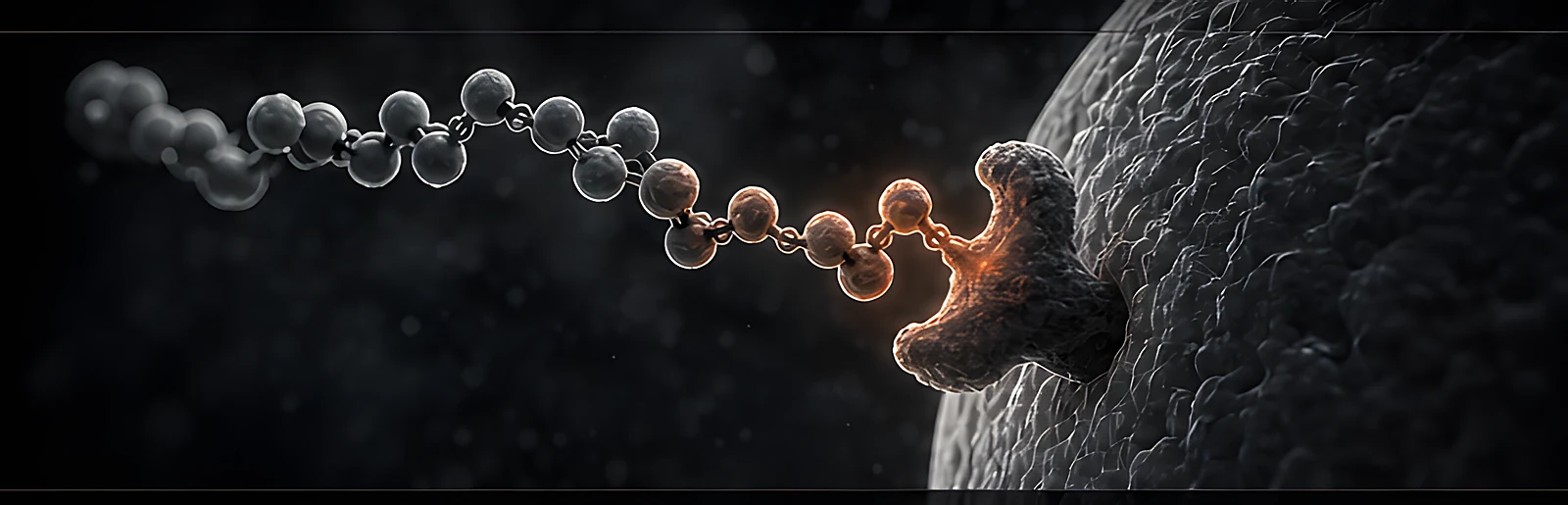
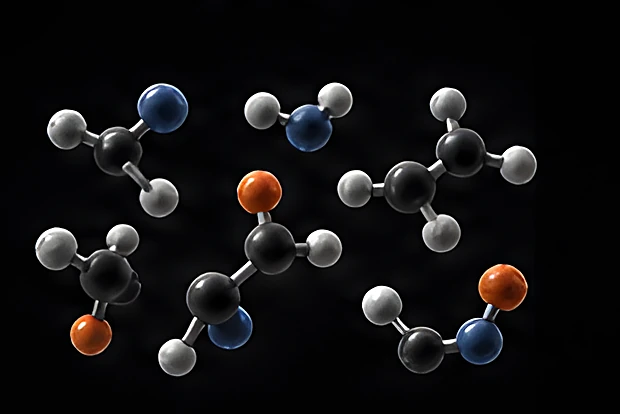
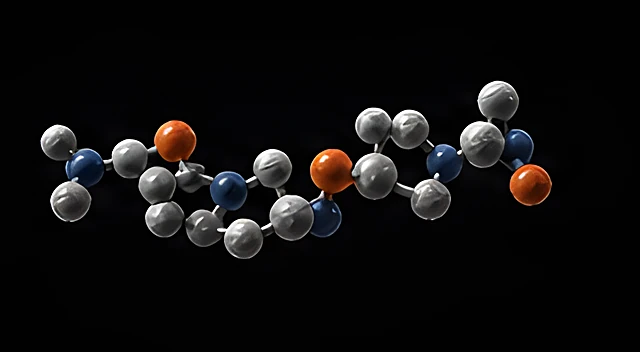
Amino acids are small building blocks. When a short number link together, the result is called a peptide.
Not every peptide uses an injection. Some peptide medicines are injected because stomach acid and digestive enzymes can break them apart, and the intestine may absorb them poorly. Other peptides may use oral, nasal, topical, or other forms depending on the specific medicine.
Delivery method depends on the peptide and its intended use.
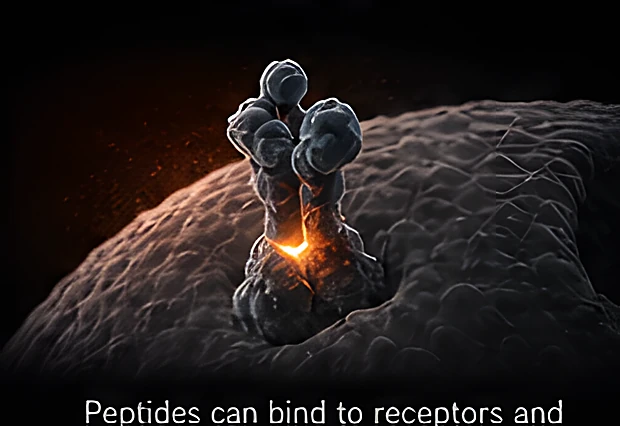
Peptides act as messengers. A peptide travels until it reaches a specific receptor — a matching “lock” on a target cell — and binding there triggers a response inside the cell.
Because each peptide fits specific receptors, signaling tends to be targeted. When the task is done, peptides break down; that breakdown time (the “half-life”) keeps signals timely.
Swallowed peptides can be broken into individual amino acids by digestion before they ever reach the bloodstream — the message is lost even though the parts arrive. Injection can bypass digestion so the peptide reaches tissue intact. But route is peptide-specific: some work topically or nasally, and “injectable” is a property of the molecule and its intended use, not a rule for all peptides. Which route is appropriate — if any — is a decision for a qualified professional.
The clearest way to learn is by function — grouping peptides by the systems they're discussed in connection with. Browse categories, read the plain-language overview for each peptide, and note the open questions.
Explore peptides by function →Learn enough to ask better questions, compare reliable sources, and make informed decisions with qualified professionals.
Engineered for consistency. Built on evidence. Driven by integrity.